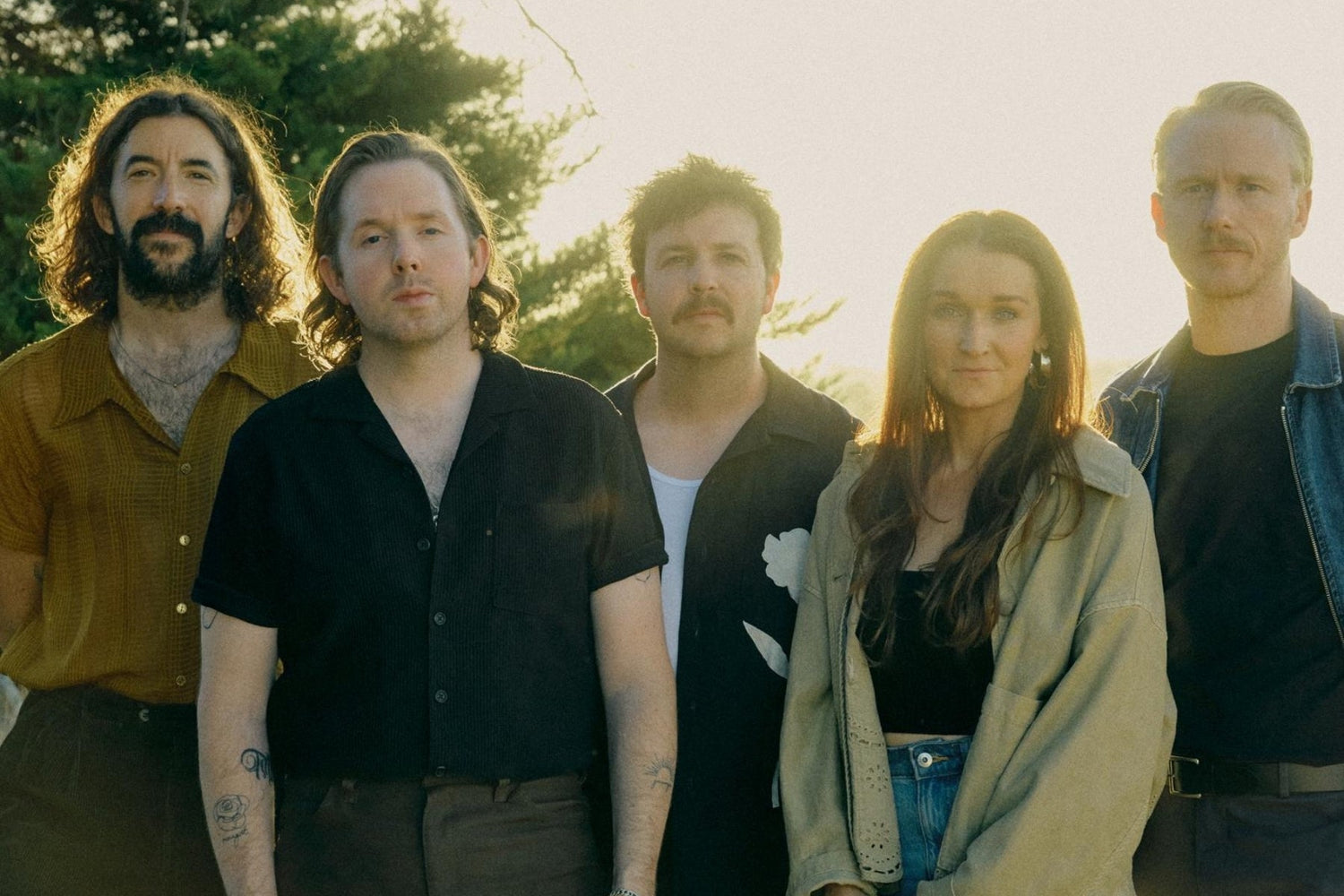
Beloved indie-folk outfit The Paper Kites are back with a reflective new offering, ‘Change Of The Wind’, serving as a poignant precursor to their seventh studio album, ‘If You Go There, I Hope You Find It’. Arriving on 23rd January via Nettwerk Music Group, the record marks a significant homecoming for the Melbourne-based quintet. After fifteen years of global touring and over two billion streams, the band retreated to the lush, rolling hills of the Yarra Valley to rediscover their core identity. This latest single captures that transformation perfectly—a soul-searching journey exploring the delicate balance between hope and the courage to change one's mind.
Written and recorded on a farm in rural Victoria, the upcoming album is an intimate exploration of connection and emotional clarity. Moving away from the expanded ensembles of their recent projects, the band have returned to their original five-piece line-up, prioritising the "magic" of their shared history over studio perfection. From capturing tracks in a single take to finding inspiration in a rusted bus in a field, the record feels like a whispered conversation with an old friend. We sat down with the band to discuss the stillness of the valley, the beauty of imperfection, and the enduring power of a perfectly written song.
In our new interview, we caught up with the band to talk about their creative process and the stories behind the new music.
Thanks so much for taking the time to chat with us today! The album title, ‘If You Go There, I Hope You Find It’, originated from a phrase written on a fogged-up bus window. Can you talk about the moment that phrase was first written, and how it evolved to become the core mission statement and title for the entire record?
Sam Bentley: “We rehearse out at a farm in the Yarra Valley in Victoria, which is a beautiful part of the country. A lot of valleys, a lot of rolling hills, very green. I spent a great deal of the year writing there, working on this record. I would be writing and presenting these songs to the band, and we'd be working on them. There's a lot of interesting things on that farm, but one of them is an old bus that sort of sits in this field, just totally rusted over.”
“We were kind of thinking of this album title, and I think that little phrase was suggested. Christina went and wrote it on the window of this bus, and it just kind of stayed there for months. And then we thought, actually, that could be like a great album cover. We took a photo of it. So, that's the cover that you see there. It's still there, actually.”
After 15 years of constant touring, you returned home to Melbourne and wrote this album on a farm in the Yarra Valley. In what specific ways do you feel that environment of stillness and peace—surrounded by fields and mountains—directly shaped the emotional or musical content of the songs on this record?
Christina Lacy: “Most of us in the band are pretty drawn to nature. We often find hikes or somewhere to walk and swim or bike ride on our days off on tour. In my life outside of band I try to spend as much time outside with my kids and it just feels to me like that’s where we are all supposed to be. For me, feeling connected to nature brings calm, creativity and really just helps everything make more sense. In saying that, I think it's fairly understandable that if you're wired that way, then a beautiful landscape and a place surrounded by nature is going to be a great place to create.”
The single ‘Change Of The Wind’ is described as exploring "the courage to change one’s own mind." For the band, what was the most significant internal or creative change you had to embrace during the making of this album, and how did that process of transformation manifest in the music?
Sam Bentley: “With our albums prior to this new record we hadn't really made music with just the five of us for quite some time. There was a small degree of worry that we hadn't really done anything that was just back to the five original members. We had become reliant on the skills of these friends (from At The Roadhouse and Roses) that we brought in to collaborate with.”
“We toured At The Roadhouse for two years as an eight-piece band and the musicianship that the extra members brought to the band was just something that you don't want to go without because it's so great. And so pulling it back to just five people, it felt like, are we still able to do this? Of course we can, but I'll say that it felt very reassuring to hear these songs with just the five of us. And to remember that we do this because it does work with the five of us. And there is this kind of magic that happens.”
You’ve mentioned, with this album, "caring less about being perfect and more about being present." Can you elaborate on how you intentionally created a space to prioritize presence and imperfection during the live recording process, especially with tracks like 'Deep (In the Plans We Made)' being recorded in a single take?
Sam Bentley: “I'm so glad to hear you talk about the imperfection factor because that is, at least by and large, lost, I think. There's so much focus on the way technology and all of that corrects the imperfections. One of the defining things we can grasp onto is our imperfections. But most songs, you know, were kind of bare in two or three takes. With ‘Deep In The Plans We Made’, it was just one microphone in the middle of the room. Dave and Christina were still learning the song as we went, and we just had this really great take with the song.”
“It felt like it was about to fall apart because it's so delicate. A very gentle three-part harmony through the whole thing sort of rises and falls. We got this great take and we were like, okay, great, let's do it again. And Matt Redlich, who engineered and co-produced with us, said, no, don't touch it. We just couldn't get it anywhere near what we managed to capture on the first take.”
The record explores the idea of "home, not as a place, but as a feeling." If you had to define that feeling for this album—that point where connection, uncertainty, and love all meet—how would you describe it using a memory or a specific scene from the time you spent writing in the Yarra Valley?
Christina Lacy: “I’d say our album At the Roadhouse was our first album where the influence of the Australian landscape became a real part of the narrative of the album. We did a lot of filming in areas around Castlemaine in Victoria where we recorded the album and it was such a beautiful country.”
“I guess this album is similar in that we are leaning into the area where we created the songs and using the farm for a lot of visuals and trying to bring listeners into the feeling of the songs by showing them some of the views that inspire us. I think it's fairly understandable that if you're wired that way, then a beautiful landscape and a place surrounded by nature is going to be a great place to create.”
The single ‘Every Town’ is a sweet, melancholic reflection on a love that lingers when everything else changes. From a songwriting perspective, what is the challenge and the reward in crafting songs that manage to hold both melancholy and hope in such a delicate balance?
Sam Rasmussen: “We say it a lot - It’s all about the feel. Years ago we went through stages where we tried to bring musical complexity into everything but these days, I think you could say our songs are pretty simple. Where recording, we always play together and capture whole takes. Usually, the first few takes are ‘correct’ but we may spend hours playing and replaying the song until it feels right. It’s not about the right chords or timing, but the discussions we have are around things like expression, dynamics, vibe, charm and taste.”
With your music now spanning moments in TV and cited by influential artists, you've remained "committed to patience, craft, and the enduring power of a perfectly written song." In a world that seems to be moving faster, what is the core philosophy or discipline that allows The Paper Kites to maintain that deep commitment to craft and intimacy in your songwriting?
Sam Bentley: “I don't know if you can describe a sound as honest, that's always what we've tried to do. We've been friends longer than we've been a band, and I think that has been the foundation of what has made this work. I really do think we've just been very careful to keep the friendship preserved.”
With a new album on the horizon and a headline show at Sydney’s Twilight at Taronga Zoo series on 6th February, 2025 is shaping up to be a landmark year for the band. ‘If You Go There, I Hope You Find It’ promises to be more than just a collection of songs; it is an invitation to slow down and find beauty in the unvarnished truth. As the band continues to evolve, they remain anchored by the very thing that started it all: five friends making music that feels like coming home.
You can pre-save the album today, and for more from The Paper Kites, join them today on Instagram, Facebook, and X.