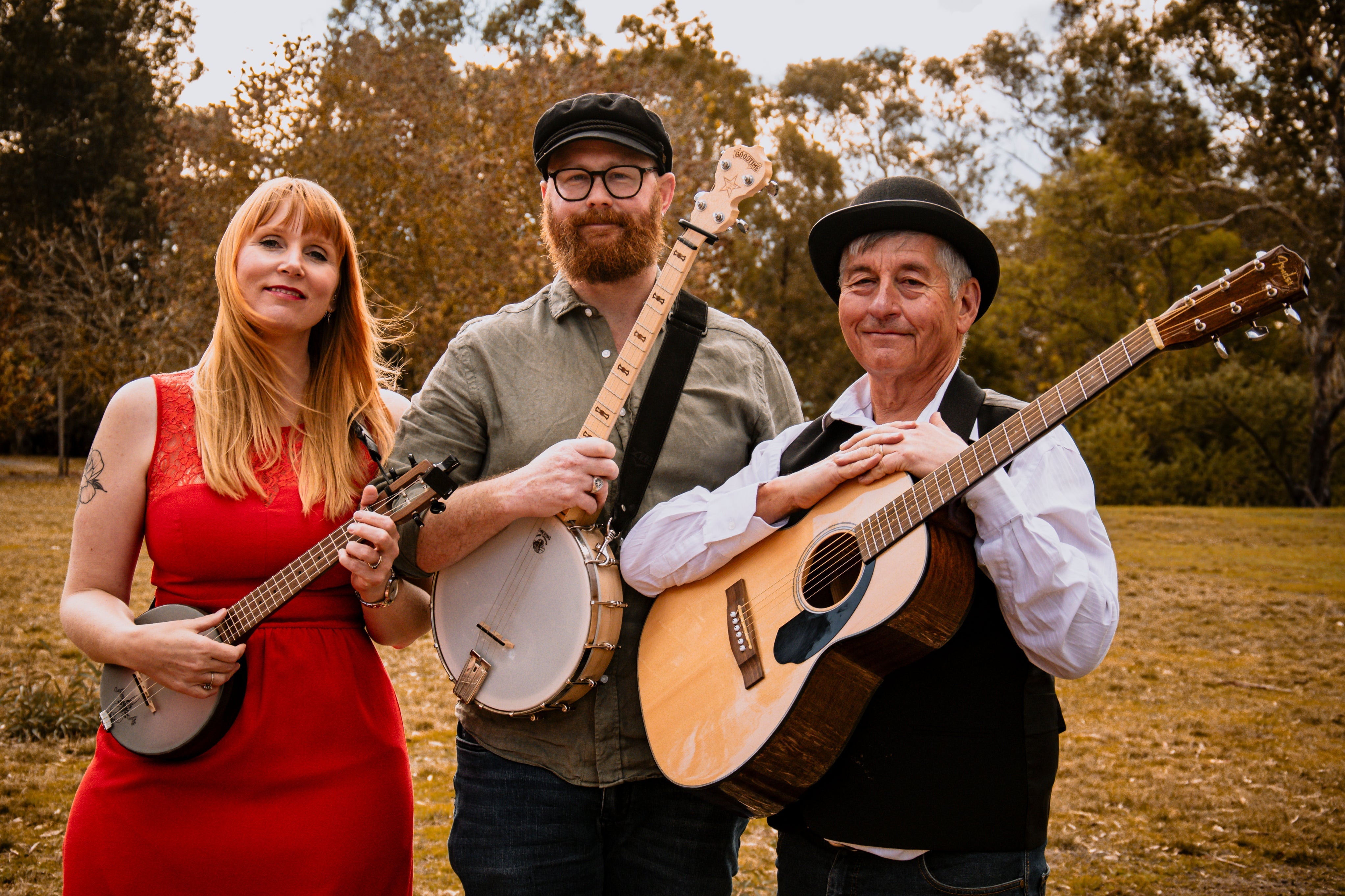
Thirty-seven years is a staggering amount of time to leave a conversation hanging. Following 1985’s ‘Quaker City’ and 1988’s ‘Eleven’, Liverpool-formed alt-rockers Innocents Abroad seemed destined to remain a beautifully preserved footnote in the annals of 1980s college rock. Yet, decades after their initial fracturing, the original songwriting partnership of Martin Malone and Peter Mills has reformed
The result of this rekindled kinship is ‘Late Spring’, a ten-track collection recorded in Berlin with producer Victor Hildebrand that completely bypasses the cynical, cash-grabbing pitfalls of the typical nostalgic reformation. Rather than mimicking the stale stadium panto of many ageing peers, the band have delivered an album bursting with melodic zeal and a surprisingly youthful buoyancy.
The record opens in spectacular fashion with the power-pop brilliance of ‘King of Luxembourg’, where Mills’ lead vocals mesh beautifully with new addition Jane Breen’s backing harmonies. The record quickly settles into a rich, distinctive groove, from the effortless basslines of ‘Parramatta Eel’ to the immersive, neo-psychedelic swirl of ‘Dandelion Clock’. It is an analogue treasure rescued from digital obscurity, closing dynamically with the frantic country-jangle of ‘The Door Into Summer’.
We sat down with Jane Breen to discuss stepping into an established 30-year dynamic, the grit it took to master the bass from scratch, recording in the historic heart of Berlin, and what the future holds for their upcoming album ‘The Long Beyond’.
Thanks for joining us, Jane! First off, welcome back to the music scene! As a classically trained musician stepping into a band with such a deep history between Martin and Peter, what was it like entering that established dynamic, and how did you find your own creative space?
“Hi there, Thomas! A good place to start. I met Martin just after he and Pete had got back in a room again after thirty years to see if they could still make music. They could. But the band needed a new bass player. As I’m classically trained in piano and clarinet – but had never held a guitar before – Martin bought me a bass, handed over R.E.M.’s first three albums and said, "If you can play these, you’re in the band." The process wasn’t without its difficult moments! Not least because Martin doesn’t read music and in the early days I needed a score and there wasn’t one. He came up with the bass parts for ‘Late Spring’ and initially following the "evolving nature" of his compositions was a challenge – he called it "feel", I called it forgetting what you came up with last time we rehearsed! We can laugh about it now!”
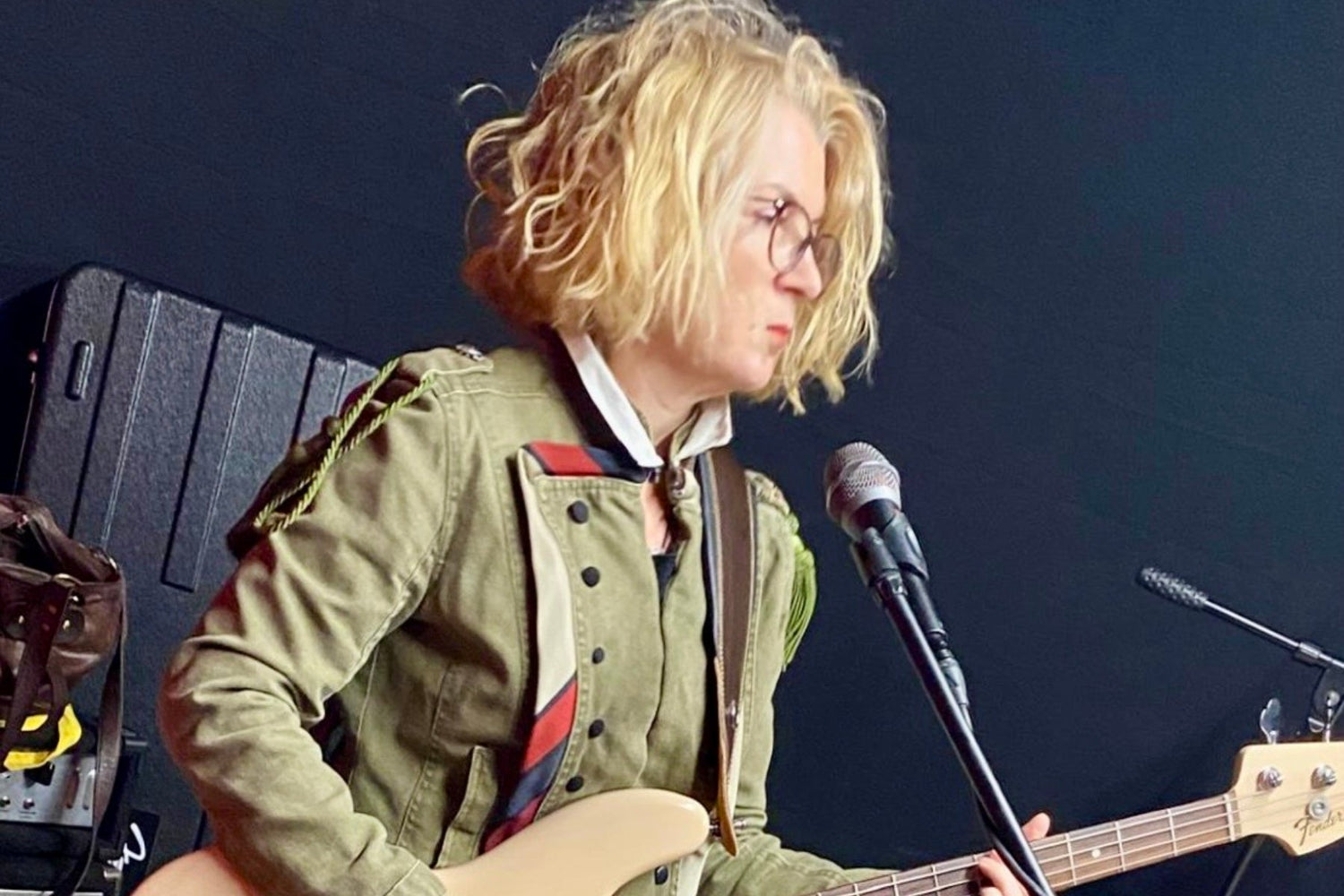
“At the start I also struggled physically because I have small hands – still can’t quite reach the G tuning peg of my Fender. But hey, I wasn’t going to feel sorry for myself. I looked to Tina Weymouth and Carol Kaye, gritted my teeth, kicked my own ass and carried on practising. I won’t lie – I put in so many hours to get good enough to play on the album – I had to.”
“It’s been a steep learning curve. When I joined Innocents Abroad, I’d no experience of being in a rock group and didn’t know a jack amp from jack shit, to be honest. But it was easy to find my own space because there are no competing egos in the band – everything focuses on creativity and coherency and making the best sound we possibly can. I’m in awe, though, of the way Martin hears the entire song and all its parts in his head. There’s such a lot of snobbery around classical music, but as far as I’m concerned, the architecture of an Innocents Abroad song is every bit as complex as an orchestral piece. And Pete’s lyrics are just great – original, clever and always delivering layers of hidden meaning. I’d say there’s definitely creative simpatico between us.”
“Take ‘Astrid’s House’, for example. Martin was fiddling around on the guitar in the kitchen, I was preparing an avocado salad, singing along unaware with a counter melody. "That’s the song!" he suddenly shouted, recorded it then and there on his phone, sent it to Pete and Pete sent back his top melody line 24 hours later. There’s a fulcrum of creative energy that sparks between Martin and Pete. They cohere so well as a team. And there’s something magical for me being a part of that team.”
“From the start Mike Mills was my go-to inspiration. His bass lines are nothing less than fabulous: interesting, varied, a lead instrument, not just the rhythm section. And he can play and sing. That’s no mean feat, as I discovered, especially if the backing vocals contrast rhythmically to what I’m playing – which more often than not they do. ‘Patience Blackburn’ was always my favourite track from the first album. I love the upbeat backing vocals Martin and I do, but after I learned to play it, I had to relearn how to play and sing at the same time. It’s a different process, and it’s harder. It’s like splitting your brain into two and getting the two halves to work independently.”
“Now I’m writing my own bass lines for the new album I find I’m influenced by the often unconventional bass parts of Colin Moulding. Last year we played at the Bi-annual XTC Convention in Swindon, and it was good for my development as a player to get to grips with songs such as ‘Mermaid Smiled’ and ‘Then She Appeared’.”
“For me, then, the journey of ‘Late Spring’ has been about discovering who I am as a bass player and, indeed, who I want to be at this stage in my life. I was a senior teacher in one of England’s top schools and I quit this to become the bass player with Innocents Abroad. Absolutely no regrets. There was one moment when we were in the studio in Berlin recording ‘Apricot’; Stuart’s drums were pounding through my feet, and I could feel my body vibrating with every bass note – it doesn’t get better than that. On the album I used a Fender and Höfner Jazz, but I have to say, when I bought my black Rickenbacker Bass, I knew that was my guitar.”
Your backing vocals on the opening track, ‘King of Luxembourg’, have been praised for creating a beautiful balance with Peter’s lead. How did you both approach building those harmonies to capture that blend of wistful reflection and youthful energy?
“The vocal harmonies grow organically from all the songs. When Martin writes the music some of the backing vocals are fixed from the start. So, there’s a mood and partial narrative there, and that’s where Pete’s genius moves in and he layers a lead vocal over this. And somehow it all melds beautifully. Martin and I multi-layered backing vocals to ‘King of Luxembourg’ which were then compressed. Our voices work well together. I’m not sure we consciously sought wistful reflection and youthful energy, but hey, I’ll take that! I guess, too, that particular combination captures the mood of ‘King of Luxembourg’ – where you look back and realise your sphere of importance is ever dwindling – and indeed the whole album.”
“We had great fun in Berlin, after all the music was recorded, taking a couple of days to lay down the backing vocals. I really like the ghostly layering of my voice in the middle eight of ‘Patience Blackburn’. It was a last-minute addition and it spooked Pete when he first heard it – Patience Blackburn is a name he came across in an old graveyard.”
On ‘Parramatta Eel’, your basslines effortlessly anchor a complex shift between major and minor chords. Can you take us through your mindset when executing that groove and navigating those emotional shifts?
“The technical answer is that we were aiming to have the bass interlock with the guitar to create a solid rhythmic and melodic bed for the vocals to sit on. The emotional shifts, I guess, occur in those liminal spaces that feature in many of Martin and Pete’s songs. They have been working together for so long they pick up the clues, effortlessly, and those shifts become integral to the music.”
“But this question made me laugh as there were certainly a lot of emotional shifts for me happening in the early practise days of this song, when I was little more than a beginner. I’d been playing bass for six months when Martin and I decamped one summer to his house in the south of France for an intense fortnight of rehearsals prior to the first full band rehearsals. In a hot July, in a sweltering upper room, wearing only the bass strapped around my neck – Martin counting furiously like a manic metronome – I just couldn’t get into the pocket of the song. That only came after I saw Jah Wobble play. God, but was he fingering the bayjesus out of his bass! It was a revelation. I’d always treated my instruments with so much reverence and care. I returned home from that gig, put down my pic, had that first moment of skin on steel and haven’t looked back. By the way, the slides on ‘Parramatta Eel’, those are my additions – me giving the melodic finger to all those heated rehearsals in France.”
‘Dandelion Clock’ features a heavy, locomotive rhythm driven by what has been described as a "warm, caramel bassline." What kind of sonic texture or gear choices were you aiming for to achieve that rich sound?
“From the outset and pre-production, Martin said "this album can’t get Revolver enough." We were aiming for English pop psychedelia akin to the Beatles and XTC’s side project, Dukes of Stratosphear. Maybe, too, a psychedelic version of The Soft Boys. In ‘Dandelion Clock’ Martin’s doing some crazy-ass guitar solos and Stuart and I had to lock in tight and ground the song in a solid rhythm.”
‘Late Spring’ was recorded in Berlin with producer Victor Hildebrand. How did the atmosphere of the city and Victor's production style influence your personal performance?
“We had an amazing three months living and recording in Berlin – a city alive with history and ghosts. I studied German at university and had first gone to Berlin as a student in 1985. For me it felt like going back to a nineteen-year-old version of myself, taking the path not travelled. Martin and I had done a recce of several studios in Berlin – including Hansa – but finally went with Victor Hildebrand at ‘Knochenland’ in the brilliantly vibrant Neukölln district of Berlin. Martin had worked as a sound engineer for years – ‘Late Spring’ is his eleventh album – but this was my first time in a recording studio and wow, it was like entering a new dimension. Like walking onto the flight deck of the Starship Enterprise! As we’re all "vintage", Martin was keen to see what a younger set of ears could bring to our music. Victor’s only in his early twenties now – an absolute prodigy – and is a wonderful producer – such a talented young guy, with a lovely, encouraging, placid temperament and the very best equipment. How can you not love a man who makes your bass sound the way he did!”
“Martin and I recorded our vocals on a Lewitt LCT 1040s and Pete used a classy combo of Neumann U87 paired with a Manley tube vocal preamp. The day and a half Victor and I spent laying down the bass parts is one of my favourite memories – just me, locked into my own playing. in musical terms, it was a kind of climbing Everest moment. And when Victor said, "that’s crazy cool," I felt I’d well and truly stuck my flag at the top of that particular summit.”
The album has a distinct, self-contained analogue feel that stands out in today's digital landscape. How did capturing the music in that classic style shape the way you locked in as a rhythm section?
“The original plan for the album was to record it using an analogue 2", 24-track. But to be honest, it’s a blurred boundary between analogue and digital. In the end we recorded digitally in Berlin with fabulous analogue mikes. The rhythm takes were all creamed off live and in terms of performance, there was a classic analogue set up with all the music in one room. But for all that, we’re not analogue zealots and will create the mood using whatever means is best for our music. If we come across as feeling analogue, that’s great, because it’s close to the intended analogue aesthetic of the album.”
The band has recently welcomed a new drummer, Gary Raymond. How is the rhythm section dynamic evolving between the two of you as you begin shaping new material?
“We’re really fortunate to have found Gary, who’s a talented drummer and orchestral percussionist. He thinks carefully about the music and what each song needs. He lives besides Martin and I in Donegal – so, for the first time, we can enjoy regular rehearsals with a drummer in the room. With us in Ireland and Stuart in London this didn’t work out after recording the album. And I can’t tell you how great it is for me to lock in with a human being for a change! It’s an addictive pairing. Gary’s also got a wry sense of humour and slots in seamlessly with our vintage vibe.”
Looking ahead to your next record, ‘The Long Beyond’, how do you feel the band’s sound is transforming, and what are you most excited for fans to hear from your own contributions?
“When we made ‘Late Spring’, I didn’t think Innocents Abroad could get any better than this. It’s a classic album that will stand the test of time and deserves more recognition that it has. But I think ‘The Long Beyond’ is, if anything, even better. I love how we’re developing what we achieved with ‘Late Spring’ and taking the music off in interesting directions, building on hypnotic grooves and going big on rich vocals and harmonies; there’s dirty bass and full jangle pop. I had to earn my way into ‘Late Spring’ – and at times it was a tough slog. But that’s not the case now. Everything about making this next album feels different. And for me, there’s nothing quite as satisfying or grounding as writing your own bass parts. That gives a true sense of belonging, partnership and ownership. ‘The Long Beyond’ feels much more like my baby. It’s a great second album!
With the brilliant 'Late Spring' cementing their triumphant return and the promising horizons of 'The Long Beyond' already taking shape, Innocents Abroad are proving that time hasn't diminished their creative fire—it has only refined it.
Be sure to follow Innocents Abroad on Bandcamp and their official social media channels to stay updated on their latest releases and upcoming journey.