
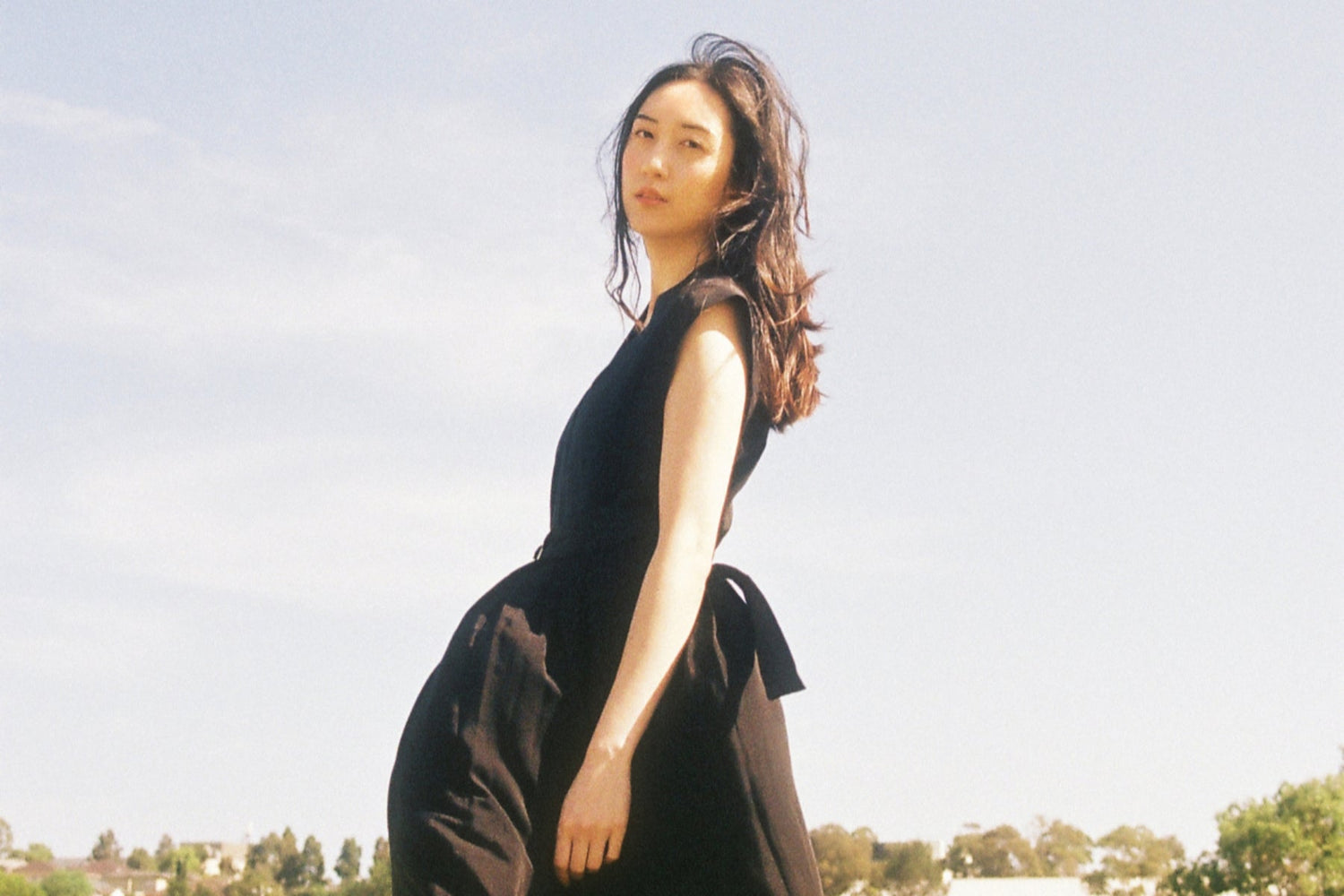
Melbourne’s indie-pop scene has found a new emotional anchor in Cecilia Xu, the creative force behind moonsea. Her latest offering, ‘I’ll kill you if you die before me’, manages to be both strikingly fragile and cheekily morbid, capturing that specific brand of affection where you love someone so much it actually starts to feel a bit threatening. The track was born from a moment of heavy contemplation regarding her long-term partner; rather than spiralling into a sombre ballad, Xu pivots towards a "tongue-in-cheek" honesty. It’s a song for anyone who has ever looked at their favourite person and felt a wave of preemptive grief, using wit to shield against the sharper edges of anxiety.
Xu’s background is as layered as her arrangements. A New Zealand-raised daughter of Chinese immigrants, her childhood was a whirlwind of gospel, show tunes, and classical rigour. Trained in piano, violin, and cello, she weaves orchestral textures into her pop sensibilities, nodding to modern icons like Phoebe Bridgers while maintaining a sound that is entirely her own. What truly sets moonsea apart, however, is her "day job" as a practising doctor. Standing at the intersection of life and death has given her a front-row seat to human fragility, allowing her clinical observations of love and fear to inform her lyrics while music provides the necessary release to process the weight of her professional life.
In this interview, we spoke with moonsea about the accidental inspiration behind her new single, how her medical career informs her songwriting, and the invaluable lessons learned from mentoring with Gordi.
Thanks so much for joining me today! I absolutely loved the new single! The title "I’ll kill you if you die before me" captures that intense side of love. How did it come about, and how did it blend with that ‘tongue-in-cheek’ sound on the single?
"It’s just a phrase that popped into my head one time when my husband tripped down the stairs! Thankfully he was fine, and I got a good song idea out of it. The thought of losing someone you love is a scary one, and I think humour was honestly one of the only ways I could handle processing it."
Your work in medicine places you at the bedside during people’s most fragile moments. How do those moments of fear and devotion translate into the stories you choose to tell in your music?
"It’s a very privileged job that affords you a unique window into other people’s lives. I don’t necessarily intentionally write about these experiences, but they inevitably bleed into my writing. I have seen many people faced with sick or dying loved ones and learned that grief has many faces, from anger and denial to tenderness and humour. It’s devastating, but it can also be beautiful, because in those moments you glimpse how deeply people love each other."
Growing up in a household that prized show tunes, gospel, and classical music is a rich foundation. How do those "traditional" genres influence the way you approach the structure of a modern indie-pop song?
"Yes, I grew up in a first-generation migrant household where English pop music was nowhere to be found. However, music was still huge in our house. My parents are both music lovers but couldn’t afford to learn instruments in their childhood (well, my dad taught himself Chinese flute but learnt it back to front and was subsequently rejected from his school orchestra), so they wanted to give me and my sister the opportunity. Most music I was exposed to as a child was through learning instruments and singing in choirs. I think this gave me a good understanding of structure and harmony which has been helpful in my songwriting, and I do find that I lean towards storytelling, drama and cinematic sounds which must stem from those traditional genres!"
As a multi-instrumentalist trained in piano, violin, and cello, how do you decide when a pop track needs the "depth" of orchestral elements versus keeping it more minimalist?
"I’m not sure it’s a conscious decision! When I’m in the studio, I tell the producer what I hear in my head, and often it will involve a flourish-y string, percussion or piano bit. Being able to play the instruments really helps. But if the track doesn’t need it, I just won’t hear those things."
Looking back at your time in the AIR Women in Music program, what was the most impactful piece of advice or perspective you gained from working with Gordi?
"I was so lucky to meet Gordi and have her as a mentor. She had so many nuggets of wisdom and is just an all-round very cool person. One tip she shared is to look through your lyrics line-by-line and think 'is this the best and coolest way I can say this?'. As someone who puts a lot of emphasis on lyrics, I love that tip and use it all the time."
How do you feel the production reflects the bittersweet intensity of the lyrics? For instance, were there specific textures or instruments you chose specifically to represent the "anxiety" versus the "devotion"?
"I think the lilting piano accompaniment is the tenderness and devotion, and then that processed vocal countermelody introduced at the very start, the horror string flourishes in verse 2 and the distorted guitars in the outro represent the turmoil. Stuart (SB90) who produced the track, did a great job of bringing this dichotomy to life. I really like the detuned background strings in the choruses; you feel like you could be listening to a run-of-the-mill love ballad, but there is something distinctly unsettling about it."
In the track you have this lyric, “Would it still be precious if it were eternal?”, which is so wonderfully put. If you could answer that question for yourself, what makes the temporary nature of life so vital to your songwriting?
"Ah, the temporary nature of life! I think it’s simultaneously one of the best and the worst things about being human. Good things don’t last, but neither do bad things. And it’s so true that understanding good things aren’t permanent makes you treasure them more. As someone who often ruminates about the future, it’s a good reminder to notice and appreciate what is in front of me. I’m glad that sentiment comes through in my song."
You’ve mentioned that music helps you stay connected to your humanity while practising medicine. In what ways does the songwriting process provide a release that your medical career might not allow for?
"Medicine is great, but there isn’t much room for creativity. Everything we do is based on evidence, facts and protocols, geared towards producing the most benefit and the least harm for the patient. It can also be stressful and confronting, and sometimes you need to disconnect from your emotions a bit to survive. Music is kind of the antidote to that. There are no protocols (well, there might be, but you’re under no obligation to follow them), and it allows you to fully lean into your emotions. On the flip side, I find that if I nourish my creative side, it makes me a better doctor because I feel more like a person, and I’m more in touch with my empathy. At the end of the day, that can be just as important as the evidence and protocols."
Ultimately, ‘I’ll kill you if you die before me’ isn't just a song about the fear of the end; it’s an urgent reminder to hold on tight to the present. It’s clever, it’s slightly desperate, and it stands as one of the most relatable portrayals of devotion you'll hear this year. By bridging the gap between clinical observation and creative vulnerability, moonsea has crafted a track that resonates with the messy, beautiful reality of being human.
For more, you can follow moonsea on Instagram, Facebook, and TikTok.