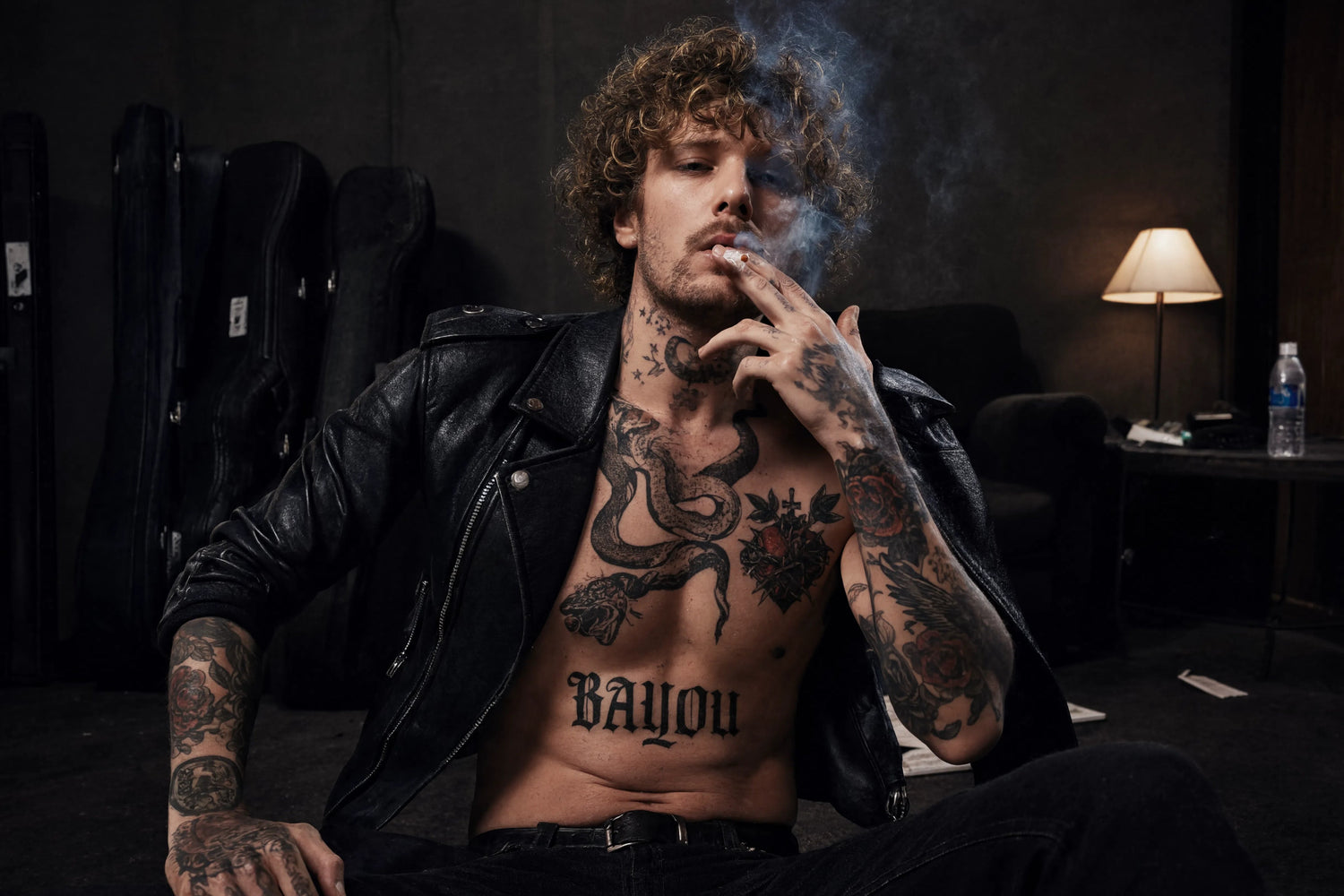
The musical landscape is often cluttered with artists playing it safe, carefully curating their image to fit neatly into pre-approved genre boxes. Then there is Knox Boudreaux. As the mastermind behind Bayou Beatdown, Boudreaux doesn’t just cross genre lines; he obliterates them with a heavy-duty combination of hardstyle, rap, swamp-rock, and industrial electronics. His latest sonic creation is less of a traditional single and more of a living, breathing entity designed to rattle ribcages and disrupt the peace.
In this exclusive interview, we sit down with the Louisiana native to dissect the DNA of his latest track and discover what happens when you let the creative impulse run completely wild. We dive deep into his chaotic early inspirations, the legendary figures who taught him how to make machines misbehave, and why he believes a song must always want something.
We recently sat down with the man himself to talk about all things music, monsters, and misbehaviour.
Thank you so much for joining us, Knox. Let’s dive right into the interview – when did you first start making music, and what inspired you to start?
“Young enough to be a nuisance, not young enough to be a miracle. I wasn’t some little Mozart in shrimp boots. I was an aggravating kid with busted gear, cheap speakers, and a gift for making adults regret leaving me unsupervised.”
“What got me was noise. Noise had muscle. Noise could walk into a room before I did and put its wet boots on the furniture. I liked that. I liked finding out that if you put enough volume behind a thought, people quit calling it a thought. They start calling it a situation.”
“And, sure, girls liked musicians. I know folks prefer the holy answer, but let’s not play church in a bait shop. You learn three chords, get your hair wrong on purpose, and suddenly your personality gets a grace period. At fifteen, that felt like discovering oil under the yard.”
Can you tell us a bit about your current project and what it means to you?
“The current project is Bayou Beatdown getting big enough to scare the furniture.”
“‘I Built the Animal’ is the latest release, and that title ain’t decorative. That’s the whole sermon right there. I didn’t stumble into this sound. I didn’t trip over some broken speaker in a ditch and call it innovation. I built it. Beatdown, hardstyle, rap, swamp-rock, dirty guitars, ugly machines, cheap carnival voltage, a little Saturday-night sin, a little Sunday-morning guilt. I took all that, threw it in the shed, shut the door, and waited to hear breathing.”
“What it means to me is simple: ownership. Sovereignty.”
“If people love it, I built it. If people hate it, I built it. If it makes somebody sweat through their shirt and make a poor decision in the parking lot, I built that too. I’m not asking anybody’s permission to name the thing anymore. The animal’s loose now. Folks can either dance, run, or stand there pretending they don’t hear it.”
Were there any artists, moments, or experiences that influenced you when creating the release?
“Oh, absolutely. I’ve always owed a debt to people who figured out how to make machines misbehave in front of rock fans.”
“The Prodigy. The Chemical Brothers. Anybody who understood that electronic music didn’t have to stand in the corner acting expensive and European. It could throw elbows. It could stink of gasoline. It could come at you like a truck full of bad ideas.”
“I like music that feels like somebody hotwired a nightclub and drove it through a wall.”
“Then you’ve got Harry Crews, because that man understood the freak as a holy object. He knew the South wasn’t just porches and manners. It’s hunger, shame, muscle, heat, violence, vanity, comedy, and people trying to act normal while the devil’s standing right there holding a beer.”
“2 Live Crew matters because they understood party music as an act of war. Dumb on purpose, smart underneath, nasty enough to make the respectable crowd show their whole ass.”
“And Rob Zombie, too. Big monster-truck imagination. Trash culture treated like cathedral glass. That’s beautiful to me. I love anybody who can take the stuff polite people throw away and build a kingdom out of it.”
How would you describe the sound on your latest release?
“Like a county fair got possessed by a drum machine. And/or the other way 'round.”
“It’s heavy. It’s nasty. It’s built to move bodies before those bodies have time to vote on the matter. You’ve got hardstyle pressure, beatdown weight, rap-mouth brag, swamp-boy soul, guitars where they belong, machines where they’re meaner, and a hook big enough for drunk people to scream like they’re testifying.”
“It’s not tasteful. Tasteful is what people call boring when it has good shoes.”
“’I Built the Animal’ sounds like chains on concrete, bass in floodwater, headlights in the woods, perfume in the backseat, and somebody laughing when they should probably be apologizing. It’s got that Gulf Coast thing in it: sweat, rot, sweetness, danger, cheap lights on black water.”
“People keep trying to decide what shelf to put it on. I hope the shelf breaks.”
What was your songwriting process? How did it all come together on this latest release?
“The title came first, because sometimes the song walks in already wearing boots. ‘I Built the Animal’. That’s not a line you politely write down and revisit later over tea. That’s a line that kicks the door open and starts eating off your plate.”
“From there, it was about making the song prove the title. I didn’t want some clever little genre exercise. I wanted it to sound assembled. Stitched. Like you could still see the bolts in the neck. So, the process was mostly scavenging the right body parts: a kick drum with a criminal record, guitars that didn’t clean up too nice, siren synths, ugly low end, gang-shout energy, and lyrics that felt like a man bragging at his own arraignment.”
“I kept asking: does this sound alive yet? Does it twitch? Does it bite? Does it make good judgment feel embarrassed?”
“Once the chorus landed, the rest of it knew where to go. The song wanted to be an origin myth, a threat, and a victory lap. So, I let it be all three. I’m generous like that.”
Was there a central message or theme you were trying to convey in your latest release?
“The message is: make the thing they can’t ignore. Not the thing they approve of. Not the thing they can classify in one sentence. Not the thing that makes the right people nod gently over a sparkling water. Make the thing with a pulse.”
“I Built the Animal” is about creation as a kind of violence. Not violence against people. Violence against permission. Against good taste. Against the little invisible fence people put around you when they think they’ve got you figured out.
“It’s also about responsibility, though folks don’t expect that from me because I don’t dress my thoughts up like a guidance counsellor. The song isn’t saying, ‘They made me this way’. It’s saying, ‘I made this. I chose the parts. I tightened the screws. I fed it. I put my face on it’.”
“That’s the theme. If you build a monster, don’t act surprised when it knows your name.”
What’s the most important thing when you’re writing a song?
“The song has to want something. That’s the whole deal. I don’t care how clever the line is. I don’t care how pretty the chord is. If the song doesn’t want something, it’s just standing there in clean pants wasting everybody’s time.”
“A song can want trouble. It can want forgiveness. It can want a woman who knows better. It can want revenge. It can want the room to explode. It can want one perfect little moment where everybody stops pretending they’re above their own body.”
“But it has to want.”
“Then after that, you need a hook that can survive poor decisions. If somebody can’t remember it half-drunk, sweating, laughing, mad at themselves, and reaching for their keys when they shouldn’t be, you may have written a very thoughtful failure.”
Do you have any advice for bands and artists who are just starting out and trying to make their mark?
“Quit trying to look like you arrived fully insured. Everybody starts ugly. Everybody starts wrong. The trick is to be wrong with flavour.”
“Don’t wait around for permission from people whose main talent is standing near the door. Build something. Break it. Build it meaner. Play bad rooms. Learn what actually moves people. Learn the difference between mystery and confusion. Mystery pulls people closer. Confusion just makes them check their phones.”
“Also, steal better. I don’t mean plagiarise. I mean, know what you’re stealing from. If you take from one fashionable source, you’re a tourist. If you take from everywhere that ever made your blood change temperature, now you’re cooking.”
“And don’t be afraid of being disliked. Being disliked is information. Being ignored is worse. If they hate you with rhythm, you’re halfway home.”
What has been your best moment as a musician or band so far? What has the reception to your latest release been like?
“Beautiful trouble.”
“Bayou Beatdown people are not the sort who clap politely and ask where the merch table is in a little museum voice. They show up ready. Rock kids, rave kids, rap kids, metal kids, girls who like danger but know exactly where the exits are, boys who need the bass to knock some of the stupidity out of them, Gulf Coast weirdos, gym psychos, night-shift romantics, exiles from better-behaved scenes.”
“They’ve got humour. That matters. You can’t really get what I’m doing if you don’t understand that something can be ridiculous and serious at the same time. A lot of life is ridiculous and serious at the same time. Sex is. Violence is. Religion is. Dancing definitely is.”
“My fanbase understands sweat. They understand bad taste when it’s done with conviction. They understand that a song can be funny, cruel, catchy, and weirdly honest all in the same breath. In other words, my people.”
Is there anything you would like to say to our audience? How can they connect with and support you?
“Yes. Listen loud enough that the song has a chance to misbehave.”
“Start with ‘I Built the Animal’. That’s the latest release, and that’s the door I’d kick open first. Then go listen to Knox Boudreaux and ‘We Don’t Die, We Amplify’ on Spotify, SoundCloud, or Apple Music. Follow, save, share, add it to playlists with names your mother wouldn’t enjoy. Send it to somebody who needs better problems.”
“Artists live and die on whether people actually move the music around. Not just ‘great track, man’ and then vanish into the fog. Play it. Post it. Put it in the group chat. Use it to start a night you may have to explain later.”
“And if you don’t like it, that’s fine too. Listen twice to make sure. The animal’s already out. I’m just seeing who has the manners to feed it.”
Whether you are ready for it or not, Knox Boudreaux is firmly at the wheel of this chaotic sonic vehicle, and he isn’t stepping on the brakes anytime soon. ‘I Built the Animal’ stands as a ferocious testament to what can happen when you reject standard conventions and embrace the beautiful trouble of pure, unadulterated noise.
To stay updated with this thrilling project, be sure to join Bayou Beatdown on all your favourite platforms.