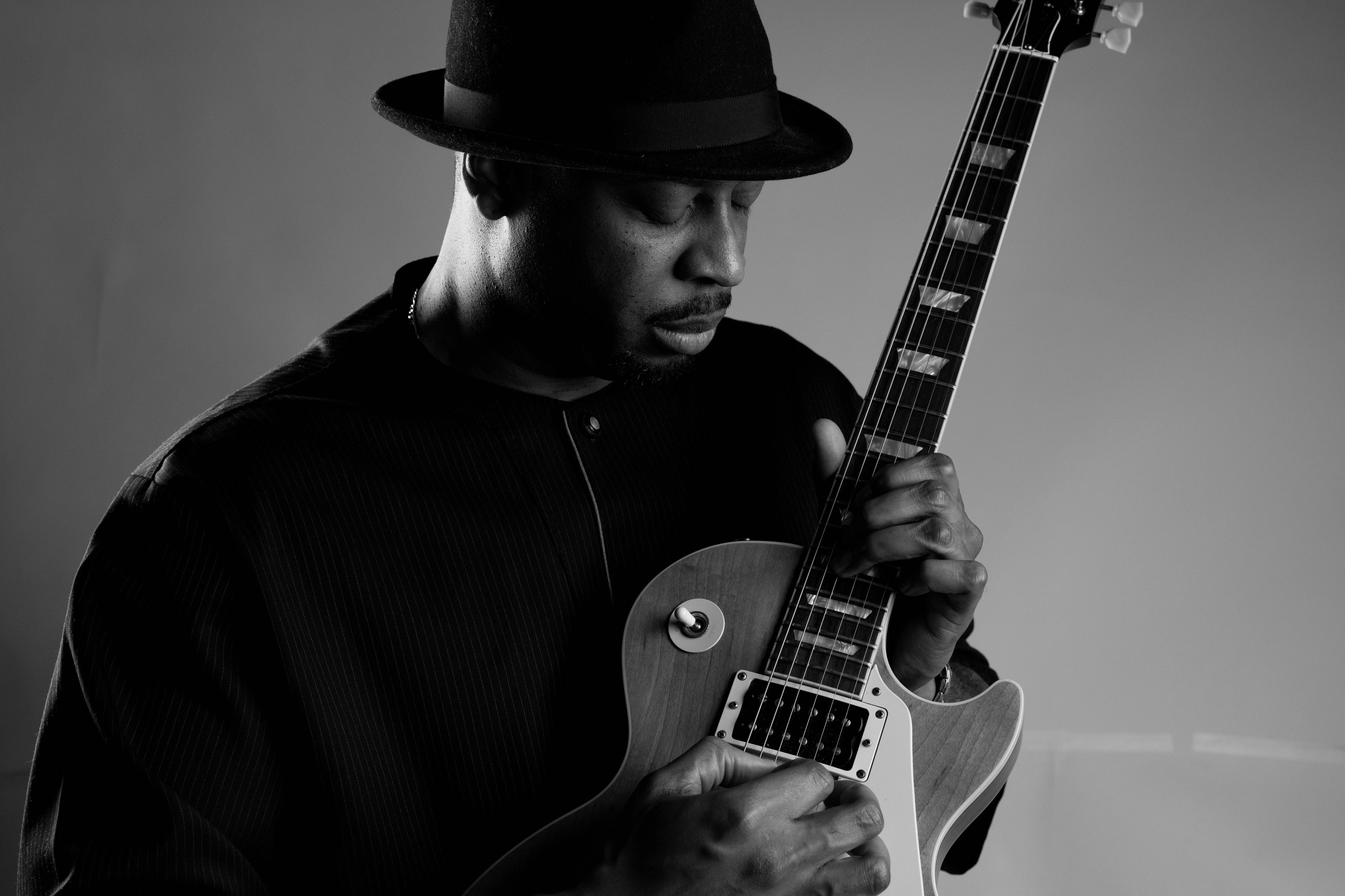

The heavy metal landscape is often defined by its aggression, but for The Crypt, it is a canvas for sprawling, avant-garde experimentation. Hailing from the isolated, windswept shores of Fish Creek, Wisconsin, the project has spent decades defying genre boundaries. From synthwave and industrial to acoustic and classic heavy metal, the creative force behind the band, Nate Yuggoth, has never been one to anchor himself to a single sound.
Their latest offering, ‘Gichigami’, is perhaps their most ambitious voyage yet. Consisting of five "metal symphonies" dedicated to the American Great Lakes, the album is a purely instrumental masterwork. By blending crushing riffs with haunting classical arrangements, The Crypt DC has reimagined the very definition of symphonic metal, stripping away lyrics to let the raw power of the water speak for itself.
We sat down with Nate to discuss the technical rigour of the new album, the influence of his Midwestern roots, and why he was trading vocal lines for "mind-bending" scales.
Thanks for joining us, Nate! The Crypt has been around since 1998, born out of the ashes of your previous band, Cryptic. Being based in a rural town on the shores of Lake Michigan, how has that isolation and your early inspirations shaped the band’s journey?
“The Crypt started in 1998, when our previous band, Cryptic broke up. We're from a really rural town on the shores of Lake Michigan, so we're very, very isolated. It's basically just been me (Nate Yuggoth: bass/vocals), since then, but we've been really active since 2016, when I moved back to the United States. I've always been super into metal, and I was so much more serious about it than anyone else in the region, so I tape traded heavily in the 90's/early 2000's, and corresponded with a lot of people.”
“As far as inspiration, it was a Friday night in September 1992, when I finally "noticed" women and metal--EVERYTHING changed when I heard Metallica at a super loud volume. They, along with Sabbath and Maiden, really inspired my bass playing, and Slayer and Morbid Angel inspired me to be a screaming bassist. My parents have great taste in music, so I learned a lot from them--everything from classical, jazz, and the greats of rock (Beatles, Pink Floyd, Led Zepplin).”
Your new album ‘Gichigami’ is a fascinating, purely instrumental tribute to the Great Lakes. What led you to this "metal symphony" concept, and how did you translate the physical characteristics of the lakes into the music?
“’Gichigami’ is our interpretation of classical music through a metal lens. I really don't like a lot of the "symphonic metal," where the structures and arrangements are simple, and the riffs boring, just with a bunch of fancy stuff thrown over the top. I wanted to make the riffs and everything "classical" in design, worthy in their own rights, and remove all lyrics to allow the music to really become the focal point. I came up with the concept after seeing a concert of Holst's Planets suite in Saint Petersburg--an excellent piece of music, by the way--and listening to all that Norwegian black metal like Immortal and Enslaved, who sing about nature and the places they are from.”
“I have never taken the place I live for granted, and it has shaped me in incredible ways. Lake Michigan, its surrounding nature, beauty, and destructive power are part of my DNA. A few years ago, I visited every of the other four lakes, and got a feel for their vibe, which I attempted to translate into music. Everything from the modes, the tempos, and the instruments has something to do with the character of each lake. For example, I based the tuning off of the depths of the lakes--for example, Lake Superior is in A, whereas Lake Erie is G.”
Beyond the lakes themselves, were there specific composers or personal experiences that guided the writing process for this release?
“My connection with the lakes (specifically Michigan and Superior), my family's connection with it (my father's family are nearly all sailors, and we spent a lot of time sailing on it when I was a kid), and classical works like Vivaldi's Four Seasons and the aforementioned Holst piece. The Czech composer Smetana has a piece called ‘Má Vlast’, or ‘My Homeland’ in English, and being that I have Czech heritage and love Smetana's work, that was a no-brainer.”
“One funny thing is that I wrote nearly all of it on a really crappy Martin Backpacker acoustic guitar while sitting in a clear vinyl tent. Our winters are really cold here, but usually sunny. I bought one of these vinyl tents so that I could sit in the sun on a cold day and get a tan (you can sit in there in your shorts on an absolutely freezing day and be sweating), taking books to read and that guitar. So, most of it was composed outside in the sun, wearing shorts in winter! But honestly, experiencing all of the Great Lakes and seeing them really inspired the music. Superior is huge, ominous, and especially malevolent. Likewise, the limestone cliffs of the Bruce Peninsula inspire fear and awe, whereas Lake Erie seemed so nice, placid, and warm to swim in in late April! However, at the end of that, you have Niagara falls, the musical equivalent of which is the ending to ‘Erige’."
The technicality on this album sounds immense. Could you walk us through the songwriting process and the challenges you faced while coordinating the classical arrangements?
“It was TEDIOUS! So much time invested in tweaking small details, throwing out things that sounded too similar, and then hiring the musicians to play the classical instruments. A lot of that was especially challenging, because we used different modes for each piece, and ‘Kanadario’ (AKA: ‘Ontario’) uses several non-standard time signatures (7/8, 13/8, 11/8, and 9/8) with some really difficult modes, including the mind-bendingly bizarre Enigmatic scale. Just wrapping my head around it was hard--getting others to do the same was even worse. A lot of musicians flat out refused to work on it--the music was too strange.”
“Not having to write lyrics was very nice, though. I've always felt that music can convey a message more effectively than words, which usually limit perception. On one of our last albums, ‘Lux Libera Me’, we used only female vocals and only in non-English languages to achieve something similar. People put too much emphasis on lyrics, and often overlook the music, which I find ridiculous.”
Looking at ‘Gichigami’ alongside your earlier work, like the re-recorded ‘Corpus Hypocrisy’, how do you view your evolution as an artist?
“This "classical" feel is definitely the culmination of my entire music journey--not the end, but a summit. We re-recorded what was supposed to be our first album (all the way back from 1999), Corpus Hypocrisy, immediately after we finished ‘Gichigami’, and the difference between that immature, but passionate thrash metal and the classical stuff is like night and day. Yet there are clear similarities with the choices of chords and melodies. As I've mentioned, we change styles a lot... I can't simply stick with one thing, especially metal, these days. And there are many, many more styles to explore!”
If there is one specific moment on the album that perfectly captures the "feeling" of the Great Lakes you were trying to convey, which would it be?
“Just to convey the feeling of the Great Lakes to someone who has either never visited them, or has a connection to them. It's more a personal love letter to them for all the inspiration and influence they've had on my life. Each song has poignant moments, from the tender and sublime beginning of ‘Erige’ to the crushing heaviness throughout ‘Gighigami’ and ‘Mishigami’, but I'd say the "overture" at the very end of ‘Kanadario’--where we play through every mode of the album in succession--has to be the ultimate moment!”
What does the future look like for you and The Crypt? Are you planning to stay focused on this project, or are there other collaborations on the horizon?
“I just want to keep creating interesting music that I enjoy listening to! I don't think there will be any more Crypt stuff in 2026, but I've got some vocal/lyrical sessions with a Zambian melodic death metal band in the works, and some music I've written for my friend Kadeem in Barbados (who rules the Caribbean metal scene) for some other project. I also have a couple of friends from Belarus and Russia with whom I participate in a black metal band--Tides of Leviathan, but I haven't done anything with them since 2020, so that could be really exciting, too.”
“I love to do guest work, because doing everything in the Crypt is so resource consuming on so many levels. I won't be joining or starting any other bands--the Crypt is very much my life's work, and will be my sole musical focus until the end. I don't play live or travel anymore, but that's fine--I just create music, and could not care less about any of the "business" part of music, so I'll do this until I no longer enjoy it. A little more recognition would be nice, as would some releases on vinyl, but I don't really want anything other than that. I've also got other hobbies, like writing books or painting, that I can do if I get tired of music.”
With ‘Gichigami’ now out, what is the next immediate chapter for the band?
“Right now, we're finishing up the last of those old releases--and album that should have been released in 2001, and we'll release it with ‘Corpus Hypocrisy’ and an acoustic EP as a compilation of early works next month. After that I want to do some really gloomy doom album...something for the cold winters! That won't be done before next year at the earliest, though. Our drummer, Dan Smrz, does a lot of film stuff as well, and has been kicking around the idea of making a feature length "music film" to our ambient album, ‘Beholden to No One’. I really hope that will happen!”
The reception seems to have been quite varied. How have people reacted to such a bold, instrumental departure?
“Surprisingly positive! A few of the elitists were upset that there were no lyrics, no ‘message’, and one dude even got upset that I wasn't going to make some sort of political stand with it, but overall, it's been really good.”
Before we go, do you have a final message for the fans on how they can best support your work?
“Just listen to the music! Buy a copy on Bandcamp, but if you're even in our neck of the woods, we have a super cool music store called Rusty Dusty in the neighbouring village of Ephraim where you can find our CDs. And check out the work done by some of our session musicians, and side projects of our band members--there's a good reason the Crypt works with all of them!”
It is clear that for Nate Yuggoth, music is less of a career and more of a lifelong, deeply personal dialogue with the environment around him. Whether he’s composing in a vinyl tent during a Wisconsin winter or mapping the depths of Lake Superior into a bass clef, The Crypt remains one of the most unpredictable and dedicated forces in the underground scene.
You can find The Crypt’s albums on Bandcamp now.