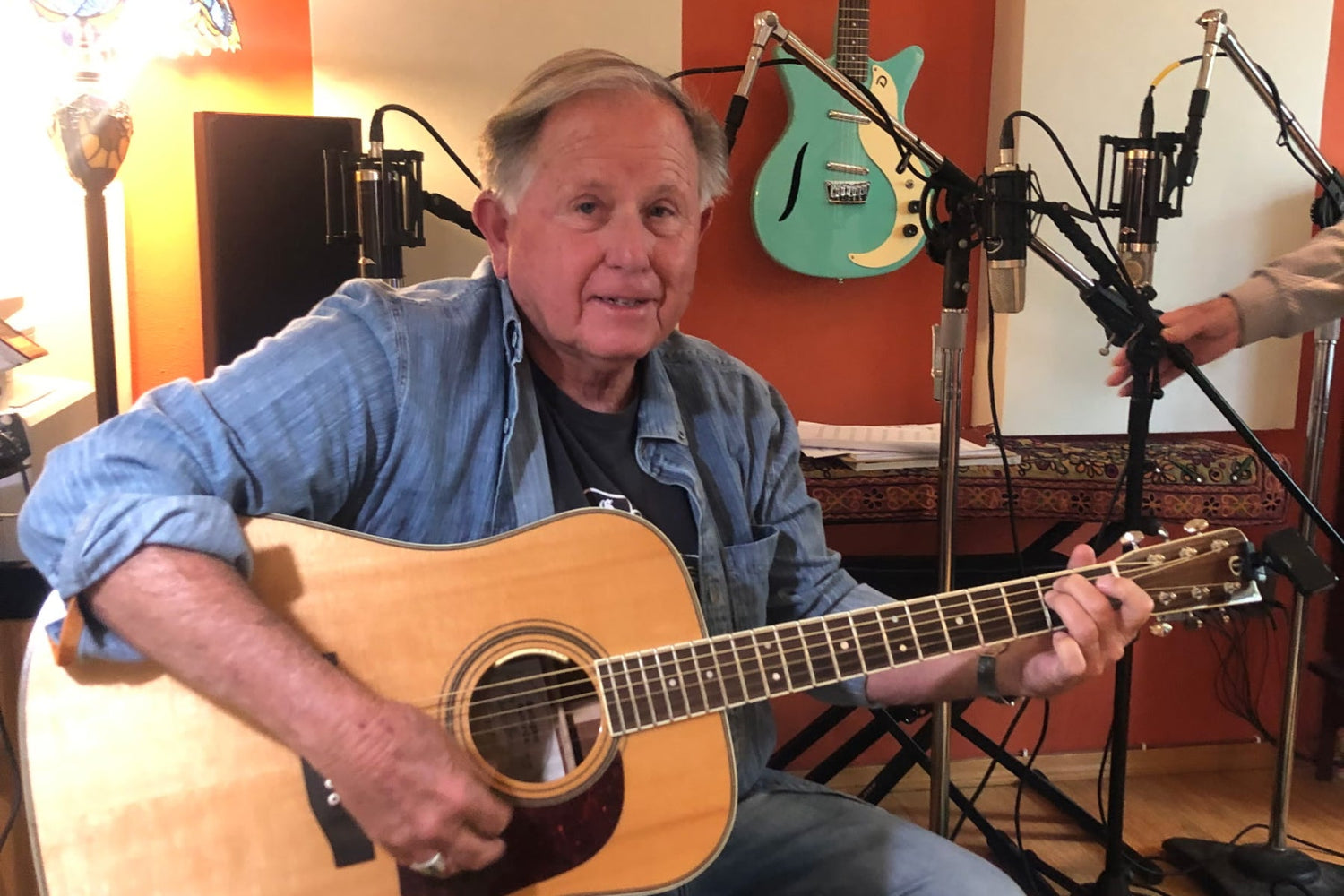
Some people spend a lifetime collecting stories, storing them away in family photo albums or passing them down through quiet conversations. Mike Mahoney, however, is turning his into a full-scale cinematic and musical experience. At 78 years old, Mahoney is proving that creativity has no expiration date, bringing the spirit of California’s golden era to a new generation through an upcoming feature film, ‘We Were Golden’, inspired by his own life, his experiences, and the timeless soundscapes that shaped him.
Born and raised in Southern California, Mahoney came of age during one of the most culturally influential periods in modern history. The 1960s in SoCal represented far more than a location—it was a state of mind built on creative freedom, friendship, surf culture, classic cars, and an unshakable belief in possibility. Decades after living that world firsthand, Mahoney walked into a recording studio at age 75 to record songs he had written 55 years prior. What began as a personal legacy project for his children quickly blossomed into an original film soundtrack and the foundation for his band, Mikey's In The Mustang.
In this interview, we sit down with Mike to discuss crafting the authentic 1960s soundtrack for ‘We Were Golden’, using vintage recording gear, turning personal history into film, and why optimism is the ultimate message for today's generation.
Thank you so much for joining us today, Mike! Stepping into a recording studio at this stage in your life to record songs you wrote 55 years ago must be incredible. How did that feel, and what was it like to hear those tracks come alive for your feature film?
“Stepping into the studio was a lifelong dream and with today’s technology it is amazing how the software can improve on your performance. Since I hadn’t hardly played the guitar in many years, I had concerns that it would come out poorly. But once in the studio my producer Dave Blackburn really worked hard with me to get the best out of me. Being 75 years old my voice, which has always had a limited range, was weak and got better as we went along.”
“The songs I wrote some 55 years ago were for my first album, ‘On the Road', which was my vanity/legacy album, and I put out under my name and not Mikey’s in the Mustang. ‘We Were Golden’ was the first song I wrote to go along with the story. Actually, the song’s lyrics were the inspiration for the story/film.”
You wrote an original soundtrack specifically to drive the narrative of ‘We Were Golden’. How did you go about crafting songs that directly reflect the emotional journeys, relationships, and key moments of Mikey and his friends?
The story is an exaggerated semi-autobiography of that time in my life. So, as I wrote the story, I visualised the “sound” that would be appropriate for that part/scene based upon the music of the time. Actually, the Soundtrack Album is a progression on how the band improves over the period of the story. They start out as a garage/surf band and expand as they go along. ‘Sweetheart’ is the “hit that never was” that they get to record, but it never gets distributed because the band falls apart.”
“The early songs like ‘Joe College’ are a reflection of the “pop songs” popular at the time. ‘A Moment in Time’ is that special memory of slow dancing in the high school gym with that special girl. The songs of the ‘Reunion, 50 years later’ pay homage to the past. ‘Friar of the Waves’ is about a band member who becomes a Franciscan priest, ‘We Were Golden’ is a tribute to the band members by their sons (which highlights their past), and ‘Music of My Life’ is the old men reflecting on how much music has meant to them. The version of ‘Taps’ is for a scene where Mikey goes to the grave of his fallen band member.”
The narrative of ‘We Were Golden’ turns on a forgotten recording that brings old friends back together decades later. How does the story structure bridge that gap between your 1960s memories and the screen?
“As a cinematic approach, I originally was going to start the film with the Reunion Concert and have the story flashback to 1967. But later decided the audience wouldn’t build the relationship with the characters if they knew that they all were old men now. So, we changed the story to build up the characters and then finish with the Reunion Concert. One thing we do not do in the story is hook any of the guys up with the girls. They all lived their lives separately for 50 years, which makes the reunion so much more impactful and unexpected. (Allows the audience to come to their own vision of how they end up).”
You’ve mentioned that music has the power to instantly transport people back to a specific place or time. How did you capture that distinct 1960s Southern California atmosphere in the sound and production of the film’s soundtrack?
“In recording the soundtrack album, we used all equipment from that period to get the original sound of the 60s. Microphone placement, vintage gear, etc. were used to recreate the sound and style.”
Your song ‘We Were Golden’—co-written and produced with David Blackburn—serves as a core piece of this project. What was the collaborative process like when taking those mid-century California influences and refining them into a soundtrack piece?
“I told Dave I wanted to write a song as a tribute to Brian Wilson (just to give it to him as a thank you for all his music that filled my life). Also, I wanted to create the theme of California in the 60’s. My first attempt came off too much like a travelogue of places. Dave then said to me that I should write lyrics about that time I lived in, as it was so special and pivotal in music. So many of the lyrics reference scenes from my life (or wishful thinking) and with Dave’s guidance and his melody we created ‘We Were Golden’.”
Rather than simply using music as background audio, the soundtrack functions as an integral storytelling character in the movie. How do the musical choices help communicate the shift from carefree days to heavier realities like the Vietnam War?
“The music becomes more sophisticated as the band matures. The story stays pretty lighthearted, but then the reality of the Vietnam War kicks in. In the story the character Charlie is an actual old folk group member of mine who did die in Vietnam (from friendly fire). His character is very much who Charlie was.”
As an artist who originally intended to record a legacy album just for your family, what was the moment you realised this music needed to become the pulse of a feature film?
“When we released ‘We Were Golden’ in the fall of 2024, it became fairly successful on the streaming platforms, especially since there was no band to promote it. I even had a member of the R&R Hall of Fame call me about it and sent it to a radio station in London. The reception of the song created many comments to me that I should do a video, which I did with my friend Billy Gereghty, and that grew into the desire to do the story. Once I started to write the story, I felt the need to create the music to go along with scenes. Also, I created the soundtrack album to assist in getting the film to become reality, as it gave the prospective production company something besides a script to get the feeling of what the time and story are about.”
‘We Were Golden’ aims to introduce the freedom, energy, and musical spirit of California’s golden era to a brand-new generation. What do you hope younger listeners take away when they experience this story and soundtrack?
“Optimism! In the 60s there were certainly challenging times with race riots, Vietnam, RFK and MLK assassinations, but through it all we thought we could change the world. That the opportunities in life were endless. I think due to so much social media, over-produced news shows and the internet, it has limited the current generation in their ability to see what is possible if you try.”
How does recording with Mikey's In The Mustang today differ from how music was made when you were coming of age in 1960s Southern California?
“The whole studio (software and production techniques) scene is different. I never did go into a studio before 2023 to record. My image was totally different than what reality is today. Many groups like The Doors or The Byrds were house bands first, so when they went into the studio the first time, they were so used to playing the songs that recording was automatic for them. Early 60’s music was pretty much limited in the amount of instrumentation that was used until Phil Spector came along. Today the ability to remotely have an artist record a track offsite and send it to you makes the need for a big studio much less than back in the 60’s.”
Your journey is a powerful reminder that creativity has no expiration date. How has integrating your music into this film inspired what comes next for you as a songwriter?
“My main focus and goal now is to get the film produced. Songwriting for me is off and on, as I don’t say, “I want to write a song today"; it just happens. I will see some photos, get a simple lyric in my mind and go with it. At 78 I have no desire to perform, or as my wife kids me, “Be a Rock and Roll Star”. I’m very happy being a great-grandfather.”
Mike Mahoney’s journey from 1960s Southern California to feature film producer and recording artist stands as a testament to the enduring nature of human passion. Rather than looking back with simple nostalgia, he has succeeded in bridging generations, translating the energy, optimism, and acoustic warmth of a bygone era into a narrative that speaks directly to the present.
Whether through the vintage microphone techniques used on his soundtrack or the deeply personal storytelling embedded in ‘We Were Golden’, Mahoney proves that the most meaningful creative chapters often arrive when backed by a lifetime of real experience. As work continues on bringing the feature film to the screen, one thing remains clear: dreams don't retire, and Mike Mahoney is only just getting started.
For more from Mike Mahoney, be sure to check out his website or head on over to YouTube to catch the music video for ‘We Were Golden’.