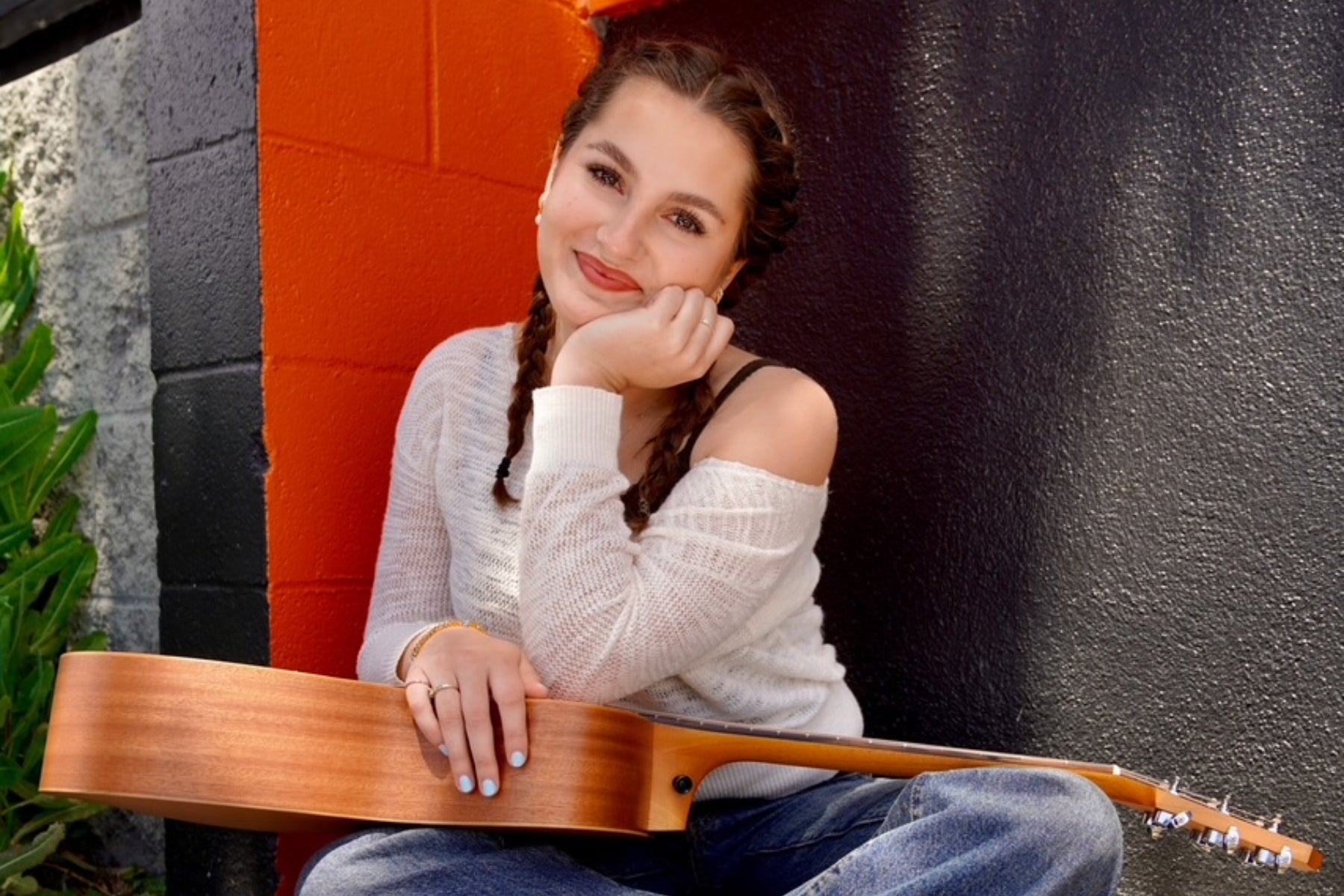

The transition from adolescence into adulthood is rarely a smooth, linear journey; more often than not, it is a chaotic whirlwind of shifting identities and intense emotional growth. For eighteen-year-old artist Gabe Lynch, this turbulent period served as the ultimate creative catalyst. His newly released debut album, ‘Farcry’, acts as a deeply personal time capsule, capturing the raw vulnerability, isolation, and self-confliction that define the modern teenage experience.
Over the past few years, Lynch found himself adopting the role of an observer, quietly absorbing the obstacles and milestones of growing up. Rather than romanticising these formative years, ‘Farcry’ documents them in real time like cinematic journal entries, moving seamlessly through states of nostalgia, anger, and hope. Sonically immersive and emotionally heavy, the project positions listeners directly between the comfort of the past and the unfamiliarity of the future.
We sat down with Gabe to discuss the inspiration behind his cinematic soundscapes, the therapeutic nature of his songwriting process, and how a firstborn album helped him learn to live with the person he is becoming.
Thanks for joining us, Gabe! When did you first start making music? Where did it all begin, and what inspired you?
“I’ve always been interested in the storytelling when it comes to music, and the way an artist can perceive different ideas and express them through sound. I started writing music when I picked up a ukulele for the first time, and I wrote my first song at 12 years old. Since then, music has become a very organic way for me to put my cards on the table and process my experiences and the things I’ve witnessed throughout the last eighteen years. I always get a rush whenever I find myself witnessing something worth writing about.”
“I think it’s important to take the thoughts and emotions that linger in your head and translate them into lyrics. In a way, it’s become a healthy addiction for me. Writing music has always felt therapeutic, almost like documenting my life in real time and turning moments, emotions, and memories into something more permanent.”
Can you tell us a bit about your latest release, ‘Farcry’, and what it means to you?
“’Farcry’ is really like a firstborn to me. I released it at eighteen years old, and it carries my perspective on growing up through my own lens. When you’re a teenager, every minor thing can feel like the end of the world, and it’s normal to internally exaggerate emotions and experiences because everything feels so immediate and intense in the moment. This album was my way of capturing those feelings honestly instead of trying to water them down or make them seem smaller than they were.”
“A lot of the project reflects the confusion, isolation, vulnerability, and emotional weight that can come with transitioning from adolescence into adulthood. At the same time, there’s also growth in it. ‘Farcry’ feels like a time capsule for a very specific chapter of my life, and creating it helped me understand myself in ways I probably couldn’t have otherwise. Within this album, I explore some intense and deeper themes. I wrote ‘Castle Keep’ about my experience with college and how I felt like I was putting on a mask, having to portray a certain version of myself in order to be seen and appreciated by people. It’s about carrying the weight and guilt of locking your real personality away to satisfy people who are not your people and were never worthy of that effort.”
“Other songs like ‘Never Goes Away’ explore the weight of internal battles and the feeling of being followed by emotions you can’t fully escape. It touches on the way certain thoughts, memories, and feelings can linger even when you try to move past them. Overall, ‘Farcry’ means a lot to me because it allowed me to turn those heavier experiences into something honest, permanent, and hopefully relatable to anyone who has ever felt overwhelmed by the process of growing up.”
Were there any particular artists, moments, or experiences that influenced you whilst writing the album?
“I’ve always been inspired by artists who are able to build entire worlds through music and sound, where listening to an album feels less like hearing a collection of songs and more like stepping into a specific atmosphere or state of mind. That idea heavily influenced the way I approached ‘Farcry’. I wanted the project to feel immersive and cinematic, almost like moving through different memories, emotions, and moments in real time. A lot of my inspiration comes from artists who are emotionally transparent in their writing and unafraid to make their music feel messy, vulnerable, or overwhelming.”
“I’m drawn to projects that feel human and intentional, where every sound, lyric, and visual contributes to the identity of the world they’re creating. That mindset pushed me to make ‘Farcry’ feel cohesive, emotionally heavy, and personal instead of just making songs for the sake of it. Beyond music itself, a lot of the album was influenced by late nights, isolation, nostalgia, growing up, and the feeling of constantly observing the world around me. I wanted to take those experiences and turn them into something immersive that people could sit with and emotionally connect to.”
What was your songwriting process like for this project, and how did it all come together?
The whole writing experience for ‘Farcry’ was like word vomit. I’ve had a lot to say for a while, so getting to explore these coming-of-age themes through music became an incredibly natural process. When you’ve sat back for a couple years and observed the journey that comes with adolescence, a lot begins to build in your mind. Eventually, I reached a point where I felt the need to let all of those thoughts and emotions out in the most honest way possible.”
“I went through a period of my life where I was watching a lot of coming-of-age movies, and I became really inspired by the way they captured emotion, growth, nostalgia, and the awkwardness of becoming your own person. I think that influence naturally found its way into ‘Farcry’, both sonically and lyrically. I wanted the album to feel cinematic and immersive, almost like scenes from different moments of growing up stitched together into one story.
How would you describe the sound on the album? Would you say there has been a noticeable evolution in your style since you first started?
“The sound of ‘Farcry’ is very versatile, conflicting, and almost bipolar in a way. From the bigger and more cinematic songs like ‘Castle Keep’ and ‘Crush’ to the more moody ballads like ‘Never Goes Away’, every track carries a different emotional weight and atmosphere. I feel like the versatility of ‘Farcry’ really mirrors the constant confusion of being a teenager and the emotional unpredictability that comes with it. Your emotions are constantly shifting, and I wanted the album to reflect that honestly instead of sounding emotionally one dimensional.”
Is there a central message or theme you wanted to convey, and is there a specific moment on the track list that completely captures that?
“I think the central theme of ‘Farcry’ is learning how to exist while growing up and realizing that change is unavoidable. The album is very much about confusion, emotional instability, identity, isolation, and trying to make sense of yourself while everything around you is constantly shifting. I wanted the project to feel honest to the experience of adolescence instead of romanticising it.”
“I think songs like ‘Castle Keep’ really capture that idea. That song reflects the pressure of feeling like you have to hide parts of yourself or become someone else just to feel accepted by people around you. Moments like that really define the emotional core of the album for me, because ‘Farcry’ is ultimately about trying to hold onto yourself while growing into someone new.”
What sort of reception have you had to the debut so far? Have there been any memorable moments that stand out?
“The reception to ‘Farcry’ honestly hit a lot harder than I expected it to. One moment that really stuck with me was playing the album for some of my close friends for the first time. We all just sat there taking it in, reflecting on different parts of our lives, and at one point we all ended up crying. It was probably the first time I realized the album could truly resonate with people outside of just myself.”
Looking ahead, what are your aspirations as an artist both musically and personally over the next few years?
“To be totally transparent, I hope to see myself writing music with a little less weight behind it in the future. Hopefully I’m not taking into account the darker side of living as much, and I’m in a healthier place mentally and emotionally. I want to give myself time to grow, experience new things, and learn more about myself so I can eventually tell those stories through sound again when I’m ready. More than anything, I just hope I continue creating music that feels honest and true to whatever stage of life I’m in at the time.”
What is next on the horizon for you now that this chapter is out in the world?
“For me, and for many other artists, releasing music is a way to timestamp your life. Releasing ‘Farcry’ felt like a natural way to close off my teenage years by revisiting everything I felt was necessary to share up to this point. I’m not really in a place to say exactly what comes next, only that I know I still have a lot more growing, learning, and living to do. Whatever comes after ‘Farcry’, I just hope it reflects who I am at that point in my life as honestly as this album did.”
By translating the heavy, lingering thoughts of youth into a permanent, relatable sonic landscape, Gabe Lynch has successfully crafted a debut that resonates far beyond his own personal reflections. ‘Farcry’ stands as an unfiltered testament to surviving the beautiful chaos of growing up, proving that vulnerability is often an artist's greatest strength. As Gabe takes a well-deserved step back to live, learn, and evolve, we cannot wait to see what the next chapter of his musical journey holds.
Be sure to follow Gabe Lynch on Instagram and subscribe to his YouTube channel to stay updated with his journey and future releases.